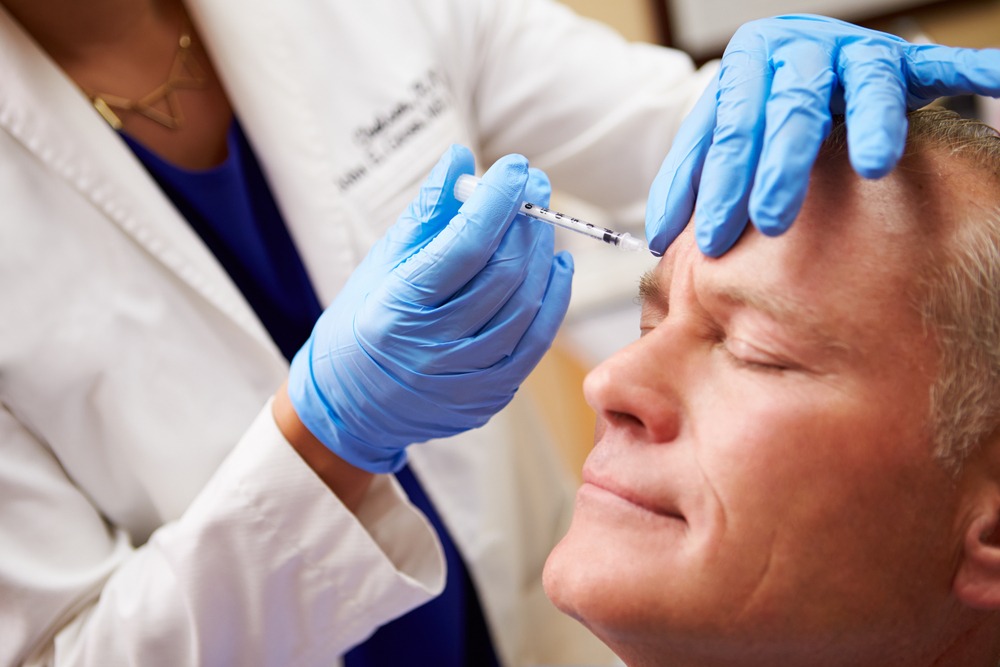
Botox Treatments


botox treatment Cheshire


Botox is the name most people use for a range of various cosmetic and medical treatments.Botox is one of the first brand names used for this prescription only treatment and is produced by Allergan.

The term Botox usually refers to the use of Botulinum Toxin type A  to reduce the appearance of fine lines and wrinkles. Botulinum Toxin is a protein which acts as a neurotoxin produced by the bacterium Clostridium Botulinum.

Botulinum Toxin has been around since the 1980’s when it was first used for facial muscle spasms and crossed eyes (strabismus).

Data shows treatments are safe with a few short term side effects such as minimal bruising at the injection sites and minor headaches which are short lived. Some people worry that Botox may be dangerous, however administered in the correct manner by a skilled medical professional carries very little risk.


Botox treatments are performed by the following Doctors and Nurses at Cheshire Lasers:

Dr Teri Johnson recently retired GP partner, specialist in Aesthetic Medicine and owner of M C Treatments.
Dr Kathryn Hazlehurst a GP trained in Medical Aesthetics and owner of Dr Hazlehurst Aesthetics.
Dr Kyra Drinnan is a GP Partner with an interest in Aesthetic Medicine.
Facial Surgeon Mr Will Allen
Aesthetic Nurse Katey of Nevaeh Aesthetics is a local community nurse with an interest in Aesthetic Medicine.

View more information about our specialists and the different types of Botox Treatments they perform here.

View an overview of our specialists’ different prices for Botox here.


Areas that Botox is used to treat include:


Botox treatments are not recommended for those who are:

  • Pregnant, trying to conceive or breastfeeding
  • Suffering from a neuromuscular disorder
  • Prone to severe allergic reactions (even though allergies to botox are rare)

If you are taking herbal or medical treatments you must discuss this with your doctor/nurse before any treatment.


What you can and cannot do after Botox treatments?

  • Do gently exercise the treatment areas by frowning, smiling and lifting the eyebrows to optimise your results
  • Do not perform strenuous physical activity for three days
  • Do not rub or massage the treated areas as this may increase the risk of complications by spreading the product
  • Do not drink alcohol, or take aspirin and ibuprofen for 24 hours as they can increase the risk of bruising and swelling

What are the risks and side effects of Botox?

  • Small area of redness at treatment site lasting 2-3 hours (common)
  • Bruising/swelling of the treatment area (less common)
  • Dull heavy sensation +/- occasional headache (less common)
  • Ptosis (droop) of eyebrow or eyelid (rare)

View Dr Teri’s website with more details about Botox treatments and aftercare here.


You can view more about how Botox works and its use in medical procedures here.


New research shows Botulinum Toxin treatments to the upper third of the face delay ageing. Find out more.
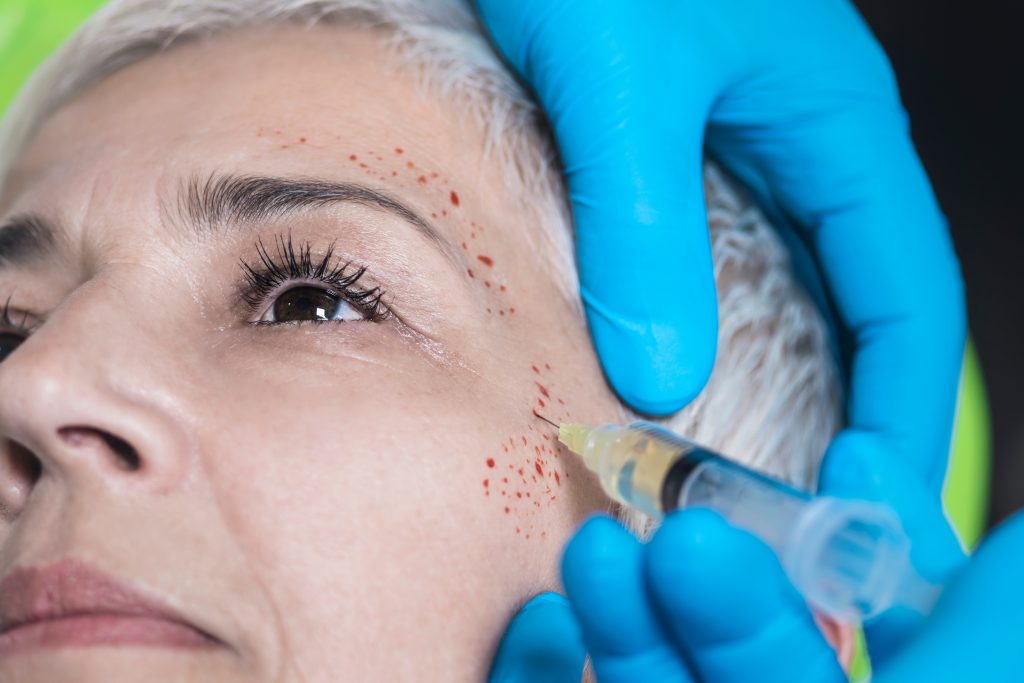


PRP Dracula Therapy


PRP Cheshire


Cheshire Lasers Clinic offers a wide range of PRP Treatments.


What is PRP?

Platelet-Rich Plasma (PRP) is a non-surgical treatment that utilises your body’s healing abilities to stimulate skin healing, repair and recovery. It has the power to trigger your body’s own tissue regeneration potential.  It is a natural treatment that uses the platelets from your blood. When activated, platelets secrete and release at least 7 different growth factors, which enhance the natural healing processes. They also stimulate collagen production to rejuvenate the skin, improve blood supply to tissues, and greatly improve skin tone and texture. It also reduces fine lines and wrinkles and can stimulate hair growth in the hair follicles.

PRP has been thoroughly investigated, and it is used for medical treatments. Doctors use PRP for nerve injury, tendinitis, osteoarthritis, cardiac muscle injury, bone repair and regeneration, plastic surgery and oral surgery. PRP also helps treat sports injuries in professional athletes to stimulate healing for skin wounds and burns.


What does PRP treatment involve?

This innovative technique involves centrifuging a small blood sample to separate it into components. Your practitioner will extract the PRP component from the sample and prepare it for injection.

Using a small sterile needle, your practitioner will inject the PRP into the treatment area.

Topical PRP can be combined with microneedling. This creates many tiny channels in the skin from microneedling, allowing the PRP to penetrate the tissues.


What types of PRP treatments are available?

At Cheshire Lasers, we use PRP on the face, neck, scalp, hands and other body areas for skin rejuvenation with sometimes astonishing results.

Treatment of the face with PRP has been called the “vampire facial” or “Dracula facial” on various reality TV shows, such as Cheshire Housewives. Celebrities such as Kim Kardashian have had this treatment to rejuvenate their skin.

PRP- Face, hands, décolletage, scarring & skin

Skin becomes plump, brighter and rejuvenated; fine lines and wrinkles reduce.  The skin’s hydration and contours improve to create a youthful, radiant bloom.
It successfully reduces crow’s feet and wrinkles around the lips, nose and mouth. It is popular for the tear trough area, giving a more natural appearance.

PRP for Hair Loss

The high concentration of growth factors in PRP will strengthen hair follicles and help address hair loss & thinning hair. For hair loss we recommend six treatments over 12 months. One every month for three months and then one every three months for nine months.


How many PRP treatments will I need?

A monthly course of treatment gives the best results. The number of treatments you require depends on the problem. Often, you will need at least three treatments.


What are the benefits of PRP:

No surgery/ no anaesthetic
Completely safe and natural – no synthetic substances/no danger of allergic reactions or infections
Walk-in Walk-out procedure – minimal disruption to your day
Virtually painless, plus fast results and fast recovery


How much does PRP cost at Cheshire Lasers?

PRP treatments cost between £400 to £600 / session


Who performs the PRP treatments at Cheshire Lasers?

Dr Will Allen performs PRP at Cheshire Lasers. You can find out more about her and view his prices here.

He provides PRP after microneedling, as well as injectable PRP.


How do I arrange a PRP Treatment?

Arrange a consultation with Dr Will Allen, phone 01606 841255 or book your appointment online here:

Book an appointment with Cheshire Lasers


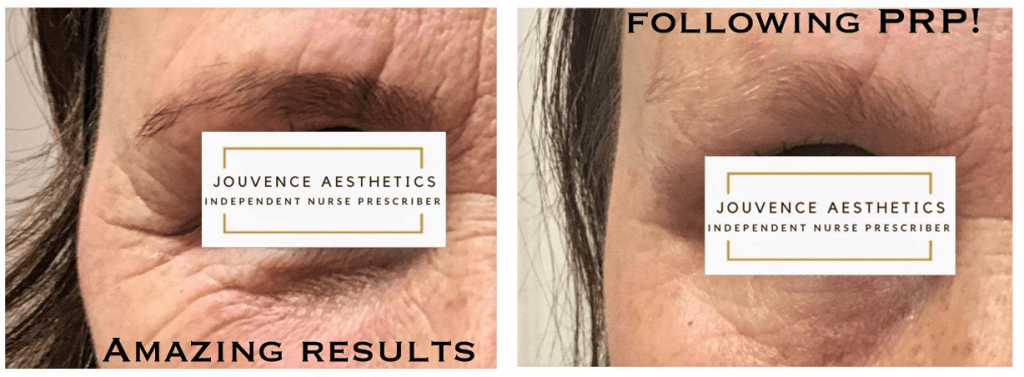
Before and After Image of PRP Treatment at Cheshire Lasers

Images are thanks to Aesthetic Nurse Moira of Jouvence Aesthetics, showing before and after PRP around the eye are


Dermal Fillers


dermal fillers cheshire


What are Dermal Fillers?

Dermal fillers are injectable treatments that reduce the appearance of wrinkles, lines and deeper folds, rejuvenating the skin to give a more youthful appearance.


Are Dermal Fillers Permanent or Temporary?

Dermal fillers are classified into two types: non-permanent (resorbable) or permanent (non-resorbable).

Non-permanent fillers last 6-18 months, depending on the product used.

Dr Teri Johnson and her associates only use resorbable fillers because permanent fillers have a much higher risk of permanent side effects.


What do Dermal Fillers contain?

In the 1980s, collagen was the first dermal filler approved in the USA.

However, the leading dermal fillers in the UK mostly contain hyaluronic acid. Hyaluronic acid is a natural component of our own skin which can be synthesised artificially to create a dermal filler. Hyaluronic acid-based fillers have the advantage that they can last 4 to 18 months, depending on the product. They can be broken down by the enzyme hyaluronidase if needed, so the filler can be removed more rapidly if necessary.

Other non-permanent dermal fillers contain ingredients such as Poly-L-lactic acid and calcium hydroxyapatite which stimulate collagen while in the skin.


Which Dermal Filler should I have?

Dr Teri Johnson and her associates at Cheshire Lasers collectively have had many years of experience performing thousands of treatments with various dermal filler brands. This experience has helped them determine which fillers work best in different areas for different skin types and indications to give the effect they want to achieve. Some dermal fillers suit some skin types more than others. There is no perfect filler; different ones last longer in some people than others. Different skin types respond better to different products.

At your consultation,  your medical practitioner will assess your skin type, thickness, hydration, texture, and the problems you hope to address. They can then recommend the most appropriate treatment for you and will show you some before and after images of her previous treatments that she has performed with that product to enable you to decide if the treatment is for you.


Which Dermal Fillers do Cheshire Lasers use?

Dr Teri and her associates use only quality-assured premium Dermal Fillers at Cheshire Lasers. Well-known established Dermal Filler brands such as Restylane, Juvederm Ultra, Juvederm Vycross, Radiesse, Ellansé, Teosyal, and Belotero.  Each specialist has a different experience in different products and has different preferences.

If you have had dermal fillers in the past, giving your medical practitioner as much information as possible about the treatment is helpful. It will benefit you and them to know which products have been used and where they were injected. It is also helpful to know whether the treatment gave you the results you expected and whether you had any unwanted effects.

Dermal fillers come in different thicknesses; in general, the thicker products help contour the face. Whilst thinner products are great for hydrating tissues, they are also more effective at treating finer superficial lines.


What can Dermal Fillers Treat?

Popular Dermal Filler treatment areas include:

Smokers Lines
Lip Rejuvenation for ageing shrunken lips
Lip Enhancement to volumise lips
Cheek Enhancement
Temple Enhancement
Chin Enhancement
Marionette Line Reduction
Naso-labial folds (nose to mouth lines)
Hand Rejuvenation
General Volume Enhancement
The 8-point lift
Scars

Advance Technique Treatments are also available:

Nose Reshaping
Tear Trough Rejuvenation
Forehead Enhancement / Brow Lift


Which Dermal Filler Treatments do we specialise in?

Dr Johnson

Dr Teri Johnson has years of experience in all the above treatments. Her favourite fillers are Restylane, Juvederm, Ellanse and HArmonyCa.

She loves performing lip and peri-oral Rejuvenation to refresh the lips and peri-oral area and prevent further signs of ageing. Dr Teri also enjoys performing full-face enhancements to reduce signs of ageing. Find out more about Dr Teri’s specialist areas here.

Dr Drinnan

Dr Kyra Drinnan primarily uses Juvederm, Teosyal, HArmonyCa and Radiesse dermal fillers. She has advanced dermal filler training and can use them to treat a wide range of problems, including lips, marionette lines, cheeks, tear troughs, chins, jawlines, hands and full face treatments.

Dr Kathryn Hazlehurst

Dr Kathryn Hazlehurst uses mostly Stylage in her practice. She loves sculpting cheeks to add definition and restore the triangle of youth and improving ratios to enhance the facial profile. She also enjoys full-face and lower-face rejuvenation, including correcting downturned smiles.

Aesthetic Nurse Katey Moulton

Aesthetic Nurse Katey uses mostly Restylane Dermal Fillers in her practice. She specialises in lip treatments and enjoys enhancing younger and older lips. She also provides lip rejuvenation treatments.


What does a Dermal Filler Treatment involve?

Find out what a Dermal Filler procedure involves here.


Side Effects from Dermal Filler Treatments


Cheshire Lasers Dermal Fillers Pre-Treatment Advice


Cheshire Lasers Dermal Fillers After Care and Recovery Information


Why have your treatment with a Medical Professional?


What is Hyaluronidase?

Hyaluronidase is also known as Hylase; it is a prescription treatment that doctors and nurses can use to dissolve Hyaluronic acid fillers.

Find out how hylase works and how to access this treatment at Cheshire Lasers here. 


Summary of Dermal Filler types we use at Cheshire Lasers:


View Dr Teri Johnson’s Blog, briefly summarising the benefits of injectable treatments here. 


How much are Dermal Fillers?

At Cheshire Lasers, Dermal Fillers prices start from £220.

The price varies depending on the filler, the location, the specialist performing your treatment and the number of syringes and sessions required.

View the Price lists for our specialists performing Dermal Fillers at Cheshire Lasers here:

Masseter / Jaw Botox


Botox of the Masseter to slim the Jawline Middlewich Cheshire


The Masseter Muscle is located at the angle of the Jaw.

This muscle can be overactive and enlarged in some people, and can lead to the following concerns:

  • masculine facial appearance
  • headaches
  • teeth grinding
  • temporomandibular joint disorder /syndrome

At Cheshire Lasers, our Aesthetic Doctors and Nurses are trained to treat the masseter with Botulinum Toxin ( Botox) to improve the appearance of the jawline.


Jaw Muscle Reduction for Masseter Hypertrophy

A strong, square jawline is often desirable in men and is seen as a sign of masculinity. Women with the same strong jawline can find this less desirable and may seek a softer, more feminised shape to their face. Asian females are particularly prone to this facial feature, and changing the shape of the face from a square to a more attractive oval shape is becoming more popular now.

Botulinum Toxin is an effective treatment for relaxing and weakening the Masseter Muscle, resulting in a softer Jaw angle.


Teeth Grinding / Bruxism

People who grind and clench their teeth usually do this at night. This condition is known as Bruxism and can cause a lot of distressing symptoms.
These symptoms include, but are not limited to;

  • headaches
  • aching of the jaw on waking
  • damage and flattening of the teeth and the need for extensive corrective dental work.

These people often develop enlarged muscles on the side of the face (giving the face a square shape) and problems with the jaw joint (Mandibular Joint, or TMJ).
Traditionally, dentists would treat this with a splint worn in the mouth at night. However, this is usually a temporary solution and can not always prevent excessive grinding/clenching once the splint is worn.

Botulinum Toxin is a safe and effective way to improve teeth grinding.

People with large Masseter Muscles (used for chewing/clenching and grinding) sometimes develop square jaws.


Temporomandibular Joint Disorder / Tension ( TMJ) Treatment

Botulinum Toxin injected into the Masseter Muscle can relieve Temporomandibular Jaw Disorder and any associated tension and pain caused by this condition. This treatment is fantastic for relieving pain and tenderness in the temporomandibular joint. It can improve the pain suffered whilst eating and reduce headaches and stress caused by this disorder.


What Treatments are available at Cheshire Lasers?

At Cheshire Lasers, our Aesthetic Doctors and Nurses can treat overactive masseters with Botulinum Toxin (Botox) to improve cosmetic appearance.

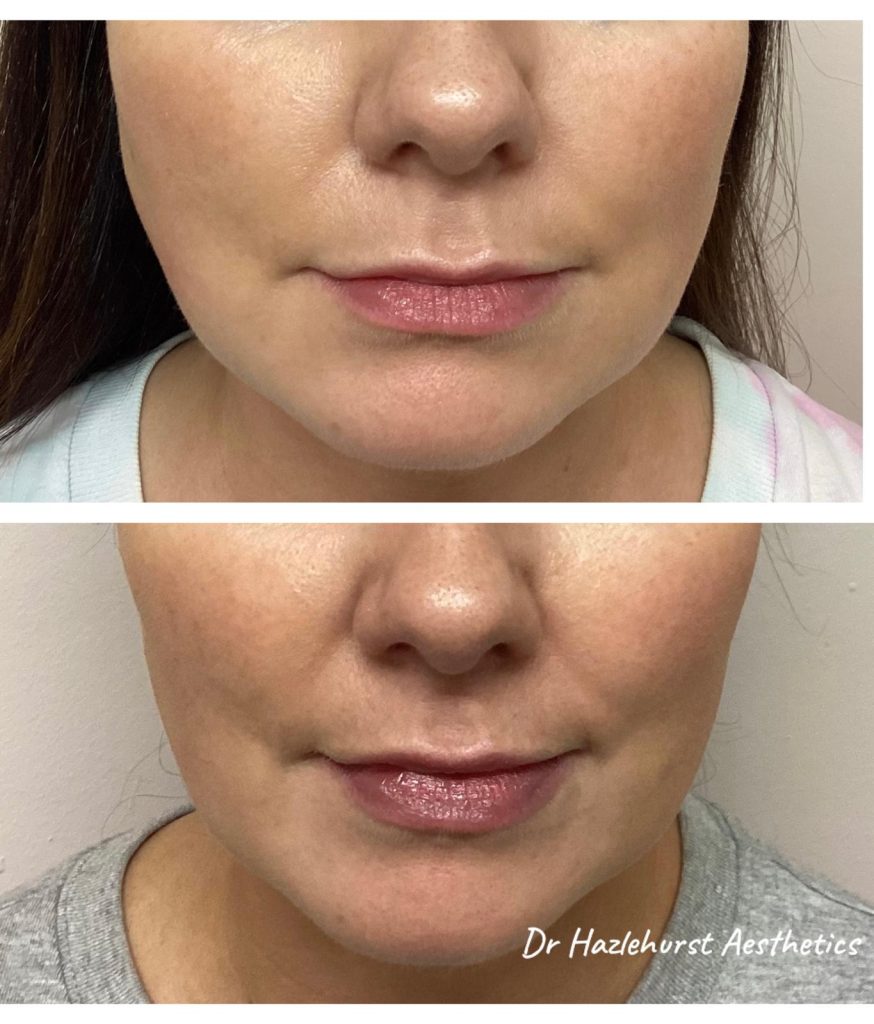
The following image shows the results of a masseter treatment with Dr Hazlehurst.

Before and after Masseter botox with Dr Kathryn Hazlehurst


What to expect during a Masseter Botox Treatment

The treatment involves injecting precise amounts of Botox into the masseter muscle. Depending on the size of the muscle, it may involve three or four injections on each side. Masseter Botox injections are a little uncomfortable but are not painful.

The treatment can take around 20 minutes in total, but the appointment time is longer. This allows time for your assessment, for you to discuss your concerns and the likely outcome, and to discuss the risks and benefits of the treatment.


When do the results of Masseter Botox kick in?

The results of Botox in the masseter are not instant. Botox starts to work at 2 weeks, and at this time the muscle becomes weaker and works less effectively. The masseter muscle then takes another 4-6 weeks to reduce in size. Once the masseter is smaller in appearance, the jawline looks softer in appearance.

The results of a single treatment can last up to 4 – 6 months,


How many Botox treatments will I need?

Masseter Botox usually needs to be repeated every 4-6 months to achieve the best results. With regular treatments, the masseter muscle tends to decrease in size, resulting in a slimmer jawline.

The treatment frequency can be reduced with time as the muscle continues to reduce in size (atrophy).

For those seeking this treatment for pain relief, a single treatment can result in a permanent change to muscle and a long-lasting reduction in clenching and grinding. However, this often depends on the cause of the problem, and some people may need additional treatment to maintain the results.


Does Masseter Botox cause Ageing or Sagging?

A strong jawline can be beneficial and may delay some signs of ageing. In younger patients with elastic skin, Botox to the masseter rarely causes sagging.

In older patients, reducing the masseter muscle can cause volume loss in the treated area, and the skin may therefore appear to sag. This could be interpreted as ageing, but it is just due to simple volume loss. If you do develop any sagging, this will reverse over time if you stop having the treatment.

During your consultation, this will be discussed with you so you can understand the pros and cons of the treatment and decide.


Who Performs Masseter Botox at Cheshire Lasers?

The following medical practitioners perform Masseter Botox for cosmetic reasons:

Click on their name to view their prices and availability.


Cheshire Lasers Aftercare Advice after Masseter Botox

  • Avoid Makeup for 12 hours after treatment
  • Gently move the treatment areas by frowning, smiling and lifting the eyebrows to optimise your results
  • Avoid strenuous physical activity for 2 days; this includes horse riding.
  • Do not rub or massage the treatment areas, as this may increase the risk of complications by spreading the product
  • Try not to take alcohol, aspirin and ibuprofen for 24 hours, as they can increase the risk of bruising and swelling
  • To reduce the risk of complications, do not undertake activities that may disturb the treated area for up to 2 weeks. Things to consider as a risk include:
    • Facial massage
    • Eyebrow waxing
    • Eyelash extensions
    • Saunas
    • Microblading
    • Facial Treatments such as Radiofrequency, HydraFacial, Microdermabrasion and CACI